


Living longer is one of modern medicine’s greatest achievements. But with more people now living into their 70s, 80s and beyond, longevity alone is no longer the goal. Rather, the focus is increasingly on how to help people live those extra years well: with vitality, dignity and independence.
The challenge is significant. By age 65, nearly 80% of Americans are managing at least two chronic conditions, and 40% take five or more medications. While medications are often essential, complex drug regimens can increase the risk of side effects and drug interactions while adding to the daily burden of living with chronic conditions.
Advances in medical technology are giving physicians more ways to meet the challenges of healthy aging. Targeted, minimally invasive interventions can provide treatment options that complement an existing medication regimen, reduce reliance on medication when appropriate, or provide a new path when a patient’s treatment plan isn’t working well enough.
“This is really a shift toward patient care becoming more personalized,” says Kenneth Stein, M.D., global chief medical officer of Boston Scientific. “As people live longer, their needs change. That makes their treatment less about finding a single therapy and more about continually aiming for the right balance for an individual patient at a particular point in their life.”
Here’s what that shift can look like in practice, across three chronic conditions: low back pain, atrial fibrillation and incontinence.
Providing lasting relief from chronic low back pain
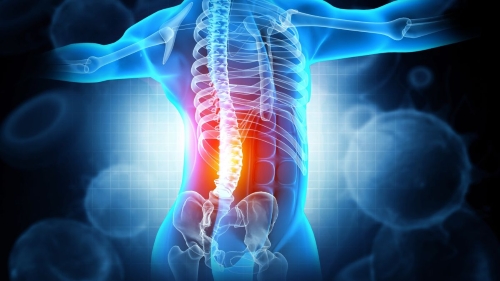
Chronic low back pain is a common condition that can have a profound effect on everyday life. For Alison, whose pain kept her from sitting or standing for long, the emotional toll became almost as significant as the physical toll. “It was a weight on me, all the time,” she recalls. “I was missing out” — a feeling that became even more acute when she was unable to play on the floor with her grandchildren.
Searching for relief, nearly 37% of Americans with chronic low back pain report using prescription pain medications. These can be important, but they can also carry risks of side effects such as sedation and confusion. And even with medication, some people continue to experience significant pain.
For an estimated one in six people whose chronic low back pain originates from changes within the bones of the spine — known as vertebrogenic pain — an outpatient procedure called basivertebral nerve ablation may offer another option. The implant-free procedure involves inserting a probe into the affected vertebra and heating the basivertebral nerve, interrupting its ability to transmit pain signals.
A study of patients treated with the Intracept™ Intraosseous Nerve Ablation System found that 80% continued to report a significant reduction in pain five years after the procedure, with nearly one-third reporting they were completely pain-free. These patients also reduced their use of opioids, with two-thirds reporting they had stopped taking them altogether.
In Alison’s case, after being diagnosed with vertebrogenic pain and undergoing the procedure, she was stunned by the degree of relief she experienced. More than five years later, she’s active in ways that previously felt impossible, including exercising, traveling and, best of all, playing with her grandkids.
Reducing AFib stroke risk with another treatment option
Atrial fibrillation, or AFib, is a common heart condition that increases the risk of stroke fivefold. For many people with AFib, stroke prevention means taking daily oral anticoagulants (blood thinners). These medications can be very effective, but they also carry a risk of bleeding, and some patients find them difficult to take consistently over the long term. “If you fall down and start bleeding, you can bleed and have it not stop,” says a patient named Linda, who was plagued by worry while taking blood thinners; her husband, Skip, recalls living in “constant, and I mean constant fear of what could happen.”
For certain patients, like Linda, a minimally invasive procedure called left atrial appendage closure, or LAAC, offers another approach. Most blood clots caused by AFib form in a small nook in the upper left side of the heart called the left atrial appendage. LAAC uses an implant to close off that area, preventing clots from escaping and reducing the risk of stroke. For many patients, the procedure can also eliminate the need for long-term blood thinners.
Clinical studies have shown LAAC to provide stroke protection similar to oral anticoagulants while significantly reducing the risk of bleeding. To date, more than 800,000 people have received a WATCHMAN™ LAAC device. For Linda, that has meant the freedom to enjoy everyday activities, like attending a family wedding or swimming at the local pool, without fear.
Treating overactive bladder
Overactive bladder (OAB) is another common condition among older adults that can dramatically affect daily life. The sudden urge to urinate — sometimes resulting in unintentional urine loss — can limit social activities, disrupt sleep and diminish confidence. Just ask Karen, a patient whose need to be near a bathroom rendered her essentially housebound, feeling isolated and “miserable”: “Ninety-five percent of my thoughts were consumed with ‘managing’ my incontinence,” she recalls.
Medication provides meaningful relief for some people, but others, like Karen, don’t achieve the results they need or they stop taking the drugs. Neurotoxin injections are another treatment option, but more than two-thirds of patients stop treatment after their third injection.
For patients who don’t get adequate relief from these approaches, sacral neuromodulation may offer another option. The therapy uses a small implant in the lower back to send electrical impulses that may help restore normal communication between the brain and bladder.
In one study, 93% of people reported improved bladder control two years after beginning therapy with the Axonics™ Sacral Neuromodulation System, and one-third reported being completely dry. Nine out of 10 said they were satisfied with the therapy. On average, patients also reported worrying less, sleeping more soundly and being more comfortable in social situations. That includes Karen who, after 12 years of suffering, is now able to leave the house and resume her active life. “It seems basic, to just live a life. But it’s not basic,” she says. “It’s huge.”
As people live longer, meeting their changing health needs will require more than any single drug, device or procedure. Rather, it will require thoughtful use of different therapies and careful attention to what matters most to each patient. Ultimately, healthy aging isn’t simply about adding years to life. It’s about helping people live those years with greater vitality, dignity, confidence and independence.
Learn more about minimally invasive treatment options to support healthier aging.
Results from case studies are not necessarily predictive of results in other cases. Results in other cases may vary. Talk to your doctor about the risks and benefits of these therapies and whether they are options for you.